Watch movies completely free on your mobile phone with Tubi! Download the app and enjoy thousands of online movies without paying.
tubi
Tubi: Free Movies & Live TV
You will remain on the same website.
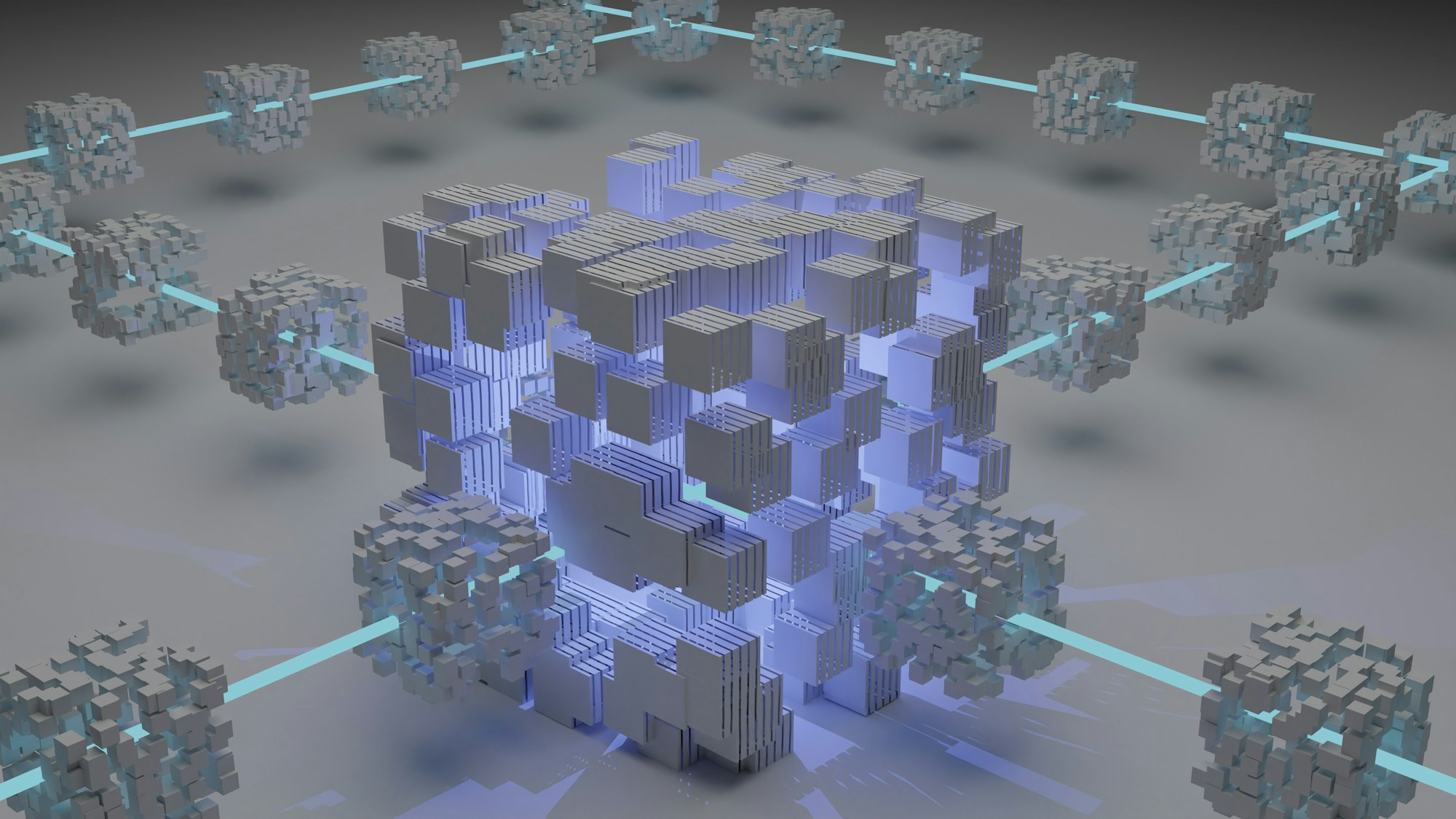
The convergence of blockchain technology and artificial intelligence is creating new paradigms for decentralized data sharing, verifiable AI computation, and trustless systems. In 2026, practical applications at this intersection are emerging beyond the hype, offering genuine solutions to challenges like data provenance, model transparency, and decentralized governance of AI systems.
Decentralized Data Marketplaces
Blockchain enables data marketplaces where data owners can monetize their datasets while maintaining control. Smart contracts automate licensing, payment, and access control, removing the need for trusted intermediaries. For AI applications, this means access to diverse, high-quality training data that would be difficult or impossible to aggregate through traditional means. Privacy-preserving techniques like secure multi-party computation and homomorphic encryption enable data usage without exposing raw data, addressing the fundamental tension between data utility and privacy.
Verifiable AI Computation
One of the most compelling applications is verifiable AI inference, where blockchain records provide cryptographic proof that a specific model produced a specific output for a given input. This addresses the trust problem in AI: when you receive an AI-generated answer, how do you know which model produced it and that it was not tampered with? Zero-knowledge proofs enable verification without revealing the model or data, creating possibilities for trustless AI services in healthcare, finance, and legal applications.
Federated Learning with Blockchain Incentives
Blockchain provides the incentive mechanism for large-scale federated learning. Participants who contribute compute and data to train shared models receive tokens proportional to their contribution. Smart contracts verify the quality of model updates and penalize malicious participants. This creates sustainable economic models for collaborative AI training that do not depend on a single organization to coordinate and compensate participants.
AI for Smart Contract Security
AI analyzes smart contracts to identify vulnerabilities, exploits, and logic errors before deployment. Machine learning models trained on historical exploit data can detect patterns associated with known attack vectors. Formal verification enhanced by AI can prove that smart contracts behave correctly under all possible conditions. Given that smart contracts often manage significant financial value, AI-powered security analysis is becoming a standard part of development workflows.
Challenges and Realistic Assessment
The blockchain-AI intersection suffers from significant hype that obscures practical applications. Many projects combine buzzwords without delivering genuine value. Scalability limitations on blockchain platforms restrict the volume of data and computation that can be processed on-chain. Energy consumption concerns, though mitigated by proof-of-stake consensus mechanisms, remain relevant. Focus on applications where the specific properties of blockchain, decentralization, immutability, and verifiability genuinely solve problems that centralized alternatives cannot address.

Written by Aarav Mehta
Senior AI Research Analyst at RashiBhavishya with over a decade of experience in machine learning, large language models, and applied AI. Aarav translates complex research into practical guides for builders and everyday users.
Join the Inner Circle
Get exclusive AI and technology intelligence delivered to your inbox every Sunday morning. No spam, just value.