Watch movies completely free on your mobile phone with Tubi! Download the app and enjoy thousands of online movies without paying.
tubi
Tubi: Free Movies & Live TV
You will remain on the same website.
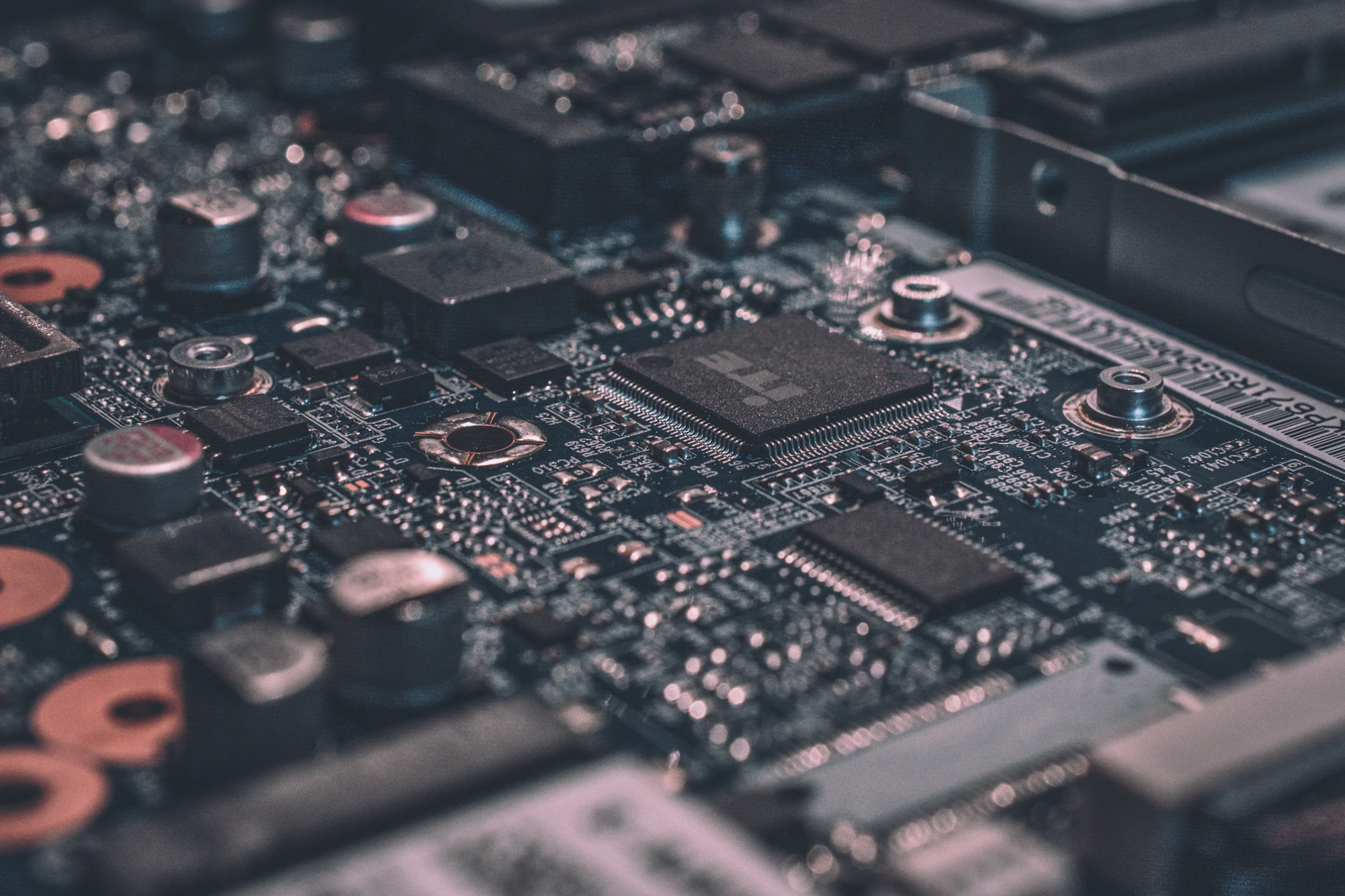
Traditional computer architectures, optimized for sequential processing, are fundamentally inefficient for the parallel, event-driven computations that neural networks require. Neuromorphic computing addresses this mismatch by designing chips that mimic the brain's architecture: sparse, event-driven, and massively parallel. In 2026, neuromorphic hardware is moving from research prototypes to commercial products, promising orders of magnitude improvements in energy efficiency for AI inference.
How Neuromorphic Computing Works
Neuromorphic chips use spiking neural networks that communicate through discrete events, or spikes, rather than continuous values. Like biological neurons, neuromorphic neurons only consume energy when they fire, enabling extreme energy efficiency for sparse computations. The architecture integrates processing and memory on the same chip, eliminating the memory bottleneck that limits conventional processors. This architecture naturally handles temporal data, making it particularly efficient for real-time sensory processing.
Intel Loihi and IBM TrueNorth
Intel's Loihi 2 and IBM's TrueNorth represent the leading neuromorphic research platforms. Loihi 2 features 1 million neurons per chip with configurable synaptic models and on-chip learning capabilities. TrueNorth integrates 5.4 billion transistors arranged in 4,096 neurosynaptic cores. These platforms demonstrate neuromorphic computing's potential for real-time pattern recognition, optimization, and sensory processing with energy consumption measured in milliwatts rather than watts.
Commercial Applications
Neuromorphic computing excels in applications requiring always-on sensing with minimal power consumption. Audio processing for keyword detection and environmental monitoring can run continuously on microwatts. Visual processing for motion detection and object tracking operates efficiently at the edge. Optimization problems like scheduling and routing benefit from neuromorphic approaches that explore solution spaces in parallel. Sensor fusion combining multiple input modalities naturally maps to neuromorphic architectures.
Software Ecosystem
The neuromorphic software ecosystem is maturing but still requires specialized knowledge. Intel's Lava framework provides tools for developing neuromorphic applications. SynSense offers commercial neuromorphic sensors and processors with development tools. Converting traditional neural networks to spiking networks for neuromorphic hardware remains an active research area. The development workflow differs significantly from traditional deep learning, requiring new mental models and expertise.
Outlook and Limitations
Neuromorphic computing is not a replacement for GPUs in large-scale AI training. Its strengths lie in edge inference, always-on sensing, and applications where energy efficiency is paramount. The technology is most compelling when power budgets are severely constrained, when real-time sensory processing is required, or when temporal dynamics are important. As the software ecosystem matures and more applications demonstrate clear advantages, commercial adoption will accelerate.

Written by Aarav Mehta
Senior AI Research Analyst at RashiBhavishya with over a decade of experience in machine learning, large language models, and applied AI. Aarav translates complex research into practical guides for builders and everyday users.
Join the Inner Circle
Get exclusive AI and technology intelligence delivered to your inbox every Sunday morning. No spam, just value.